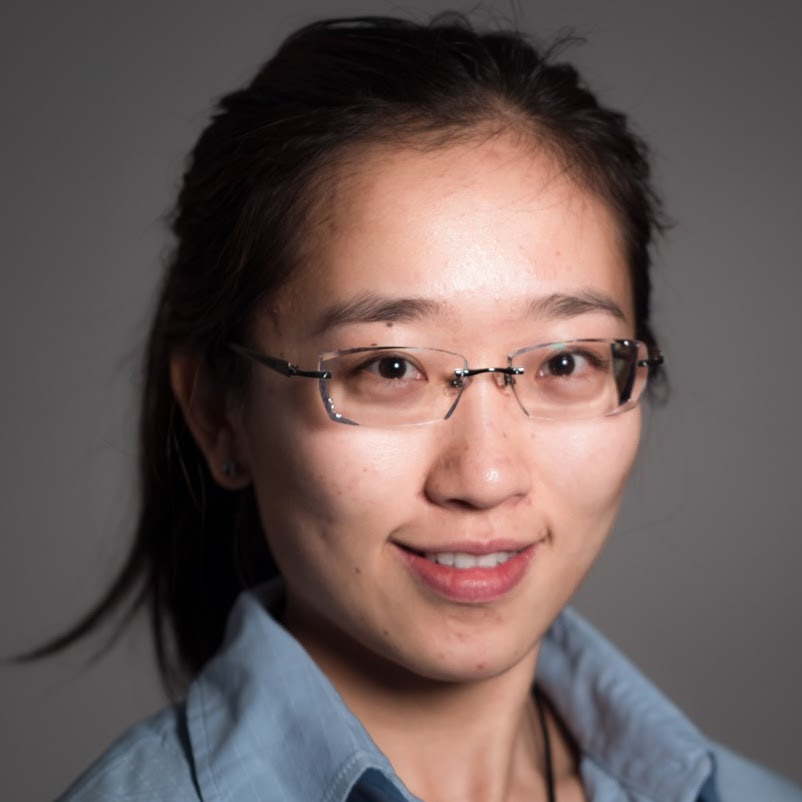
Murphy Yuezhen Niu
Research scientist focusing on quantum algorithm design, near-term quantum error correction, intelligent quantum control optimization and quantum machine learning.
Research Areas
Authored Publications
Sort By
Reinforcement Learning Control of Quantum Error Correction
Cameron Maxfield
Guifre Vidal
Bob Buckley
Jonathan Waltz
Christopher Wood
Reza Molavi
John Mark Kreikebaum
Rajeev Acharya
David Sobel
Abeer Vaishnav
Ali Hadjikhani
Ryuho Kudo
Wendy Leung
Brett Buchea
Ningfeng Zhu
Shirin Montazeri
Jamie Yao
Bicheng Ying
Eric Mascot
Lenny Fuste
Zhenjie Zou
Rodrigo Cortinas
Matt Lloyd
Clarke Smith
Kris Ottosson
Emma Ropes
Felix Borjans
Rebecca Potter
Sean Harrington
Jeremy Hilton
David Enriquez
Stephen Heslin
Paula Heu
Daniel Lundahl
Elliot Young
Alex Crook
Fedor Kostritsa
Roberto Rodriguez
Chia Ni
Kim Ming Lau
Priyanka Thiruraman
Martin Damyanov
Logan Oas
Dmitry Abanin
Oscar Higgott
Aaron Shorter
Steve Habegger
Aniket Maiti
Ryan Kaufman
Valerie Ehimhen
Sayra Alcaraz
Marcos Flores
Elizabeth Rossi
Aria Shahingohar
Dario Rosenstock
Travis Weidel
Steven Waltman
Kristi Wong
Murat Sarihan
Arun Kumar
Vladimir Shvarts
Matt Reagor
Alfredo Torres
Michael Qian
Anthony Megrant
Charles Neill
Christopher Hudspeth
Michael Hamilton
Bill Huggins
Laura De Lorenzo
Tan Ha
Ran Zhang
Dar Gilboa
Nicholas Bushnell
Sherman Peek
David Rhodes
Leigh Martin
Mike Shearn
Vlad Kurilovich
David Browne
Spencer Small
Brian Ballard
Will Oliver
Lior Ella
Orion Pritchard
Josh Cogan
Rachel Resnick
Dmitri Maslov
Jose Guerrero
Paul Masih Das
Theodore White
Helge Gehring
Nikita Astrakhantsev
Can Knaut
Maddy Woodson
Brooks Foxen
Frank Arute
Alejo Grajales Dau
Yaxing Zhang
Aaron Szasz
Alexander Lill
Justin Ledford
Xiaoxuan Jin
Andreas Kabel
Sid Madhuk
Orion Martin
Catherine Vollgraff Heidweiller
Gabrielle Roberts
Juan Campero
Juhwan Yoo
Robert Salazar
Michael Newman
Arpit Ranadive
James Goeders
William Giang
Gonzalo Garcia
Agnetta Cleland
Maddie Taylor
Dogan Timucin
Ross Alcaraz
Hui Kang
Johannes Bausch
William Courtney
Robert Gasca
Kevin Satzinger
Meghan Voorhees
Silas Chen
Laleh Beni
Andrew Dunsworth
Jamal Busnaina
Pavel Laptev
Kiseo Kang
Shannon Wang
Paul Donohoe
Paul Conner
Vadim Smelyanskiy
James Spencer
Benjamin Chiaro
Grayson Young
Tim Burger
ILYA Drozdov
Peter Brooks
Jordan Suchard
Austin Fowler
Jimmy Chen
Alec Eickbusch
Francisco Heras
Hung-Shen Chang
Michael Broughton
Jeanne Hartshorn
Aviv Elbag
Martin Bigdeli
Tanner Hadick
Juan Atalaya
Mahmoud Elzouka
Melvin Mathews
Alex Sztein
Markus Ansmann
Pavol Juhas
Bryan Cochrane
Murray Ich Nguyen
Ashley Maloney
Will Livingston
Roberto Collins
Ming Li
Élie Genois
Jeremiah Ford
Christopher Garrick
Sayan Das
David Peterson
Eifu Tomita
Suhas Ganjam
Reno Hiltermann
Dylan Bowers
Bryce Kobrin
Yu Chen
Dan Riley
Leon Brill
Barrett Spells
Ben Curtin
Mike Hucka
Seneca Meeks
Sebastian Molina
Tiano Lange-Dei
Georg Aigeldinger
Ashley Huff
Wing Li
ZLATKO MINEV
Monica Hansen
Sebastian Schroeder
Walt Askew
Dietrich Graumann
Elias Portoles
Stijn de Graaf
Matt Cockrell
Harold Cook
Masaya Fukami
Noah Shutty
Ed Gonzales
Robert Geiger
Amir Karamlou
Loick Le Guevel
Ebrahim Forati
Justin Vargas
Doug Thor
Joel Grebel
Lucia De Rose
LILY LI
Dave Landhuis
Emma Rosenfeld
Hsin-Yuan (Robert) Huang
Kenny Lee
Shaun Jevons
Ping Yeh
Amira Abbas
Kunal Arya
Henry Schurkus
Hector Bates
Ganesh Ramachandran
Sergey Vdovichev
Brayden Ware
Max Schaefer
Cheng Xing
Brandon Langley
Anthony Cabrera
Michel Devoret
Cody Jones
Vlad Sivak
Mert Torunbalci
Ben Kueffler
Chaitali Joshi
Raja Gosula
Joy Lee
Alexander Korotkov
Thomas Edlich
Aditya Locharla
Nathan Lacroix
George Sterling
Hao Tran
Kostyantyn Kechedzhi
Trond Andersen
Alexandre Bourassa
Aaron Lunt
Alan Fung
Alex Pizzuto
Salvatore Mandra
Alex Greene
Vitali Kutsko
Kannan Sankaragomathi
Sofia Springer
Vinicius Ferreira
Raymond Orosco
Nature (2026)
Preview abstract
The promise of fault-tolerant quantum computing is challenged by environmental drift that relentlessly degrades the quality of quantum operations. The contemporary solution, halting the entire quantum computation for recalibration, is unsustainable for the long runtimes of the future algorithms \cite{reiher2017elucidating,gidney2025factor}. We address this challenge by unifying calibration with computation, granting the quantum error correction process \cite{ryan2021realization,krinner2022realizing,sivak2023real,acharya2024quantum, bluvstein2024logical,bluvstein2025architectural,lacroix2025scaling} a dual role: its error detection events are not only used to correct the logical quantum state, but are also repurposed as a learning signal, teaching a reinforcement learning (RL) agent \cite{silver2017mastering,mnih2015human,levine2016end, shalev2016safe,ouyang2022training} to continuously steer the physical control parameters and stabilize the quantum system during the computation. We experimentally demonstrate this framework on a Willow superconducting processor, improving the logical stability of the surface code 3.5-fold against injected drift. By synthesizing our full suite of technological advances, including RL fine-tuning of the entire system and near-optimal decoding \cite{senior2025scalable, beni2025tesseract}, we achieve record performance of the surface and color codes, with average logical error per cycle of $\varepsilon_L=7.7\times10^{-4}$ and $\varepsilon_L=8.2\times10^{-3}$ respectively. Simulations of surface codes up to distance-15 with tens of thousands control parameters confirm the scalability of our RL framework, revealing an optimization speed that is independent of the system size. This work thus enables a new paradigm: a quantum computer that learns to self-improve directly from its errors and never stops computing.
View details
Optimizing quantum gates towards the scale of logical qubits
Alexandre Bourassa
Andrew Dunsworth
Kevin Satzinger
Will Livingston
Vlad Sivak
Trond Andersen
Yaxing Zhang
Desmond Chik
Jimmy Chen
Charles Neill
Alejo Grajales Dau
Anthony Megrant
Alexander Korotkov
Vadim Smelyanskiy
Yu Chen
Nature Communications, 15 (2024), pp. 2442
Preview abstract
A foundational assumption of quantum error correction theory is that quantum gates can be scaled to large processors without exceeding the error-threshold for fault tolerance. Two major challenges that could become fundamental roadblocks are manufacturing high-performance quantum hardware and engineering a control system that can reach its performance limits. The control challenge of scaling quantum gates from small to large processors without degrading performance often maps to non-convex, high-constraint, and time-dynamic control optimization over an exponentially expanding configuration space. Here we report on a control optimization strategy that can scalably overcome the complexity of such problems. We demonstrate it by choreographing the frequency trajectories of 68 frequency-tunable superconducting qubits to execute single- and two-qubit gates while mitigating computational errors. When combined with a comprehensive model of physical errors across our processor, the strategy suppresses physical error rates by ~3.7× compared with the case of no optimization. Furthermore, it is projected to achieve a similar performance advantage on a distance-23 surface code logical qubit with 1057 physical qubits. Our control optimization strategy solves a generic scaling challenge in a way that can be adapted to a variety of quantum operations, algorithms, and computing architectures.
View details
Dynamics of magnetization at infinite temperature in a Heisenberg spin chain
Trond Andersen
Rhine Samajdar
Andre Petukhov
Jesse Hoke
Dmitry Abanin
ILYA Drozdov
Xiao Mi
Charles Neill
Rajeev Acharya
Richard Ross Allen
Kyle Anderson
Markus Ansmann
Frank Arute
Kunal Arya
Abe Asfaw
Juan Atalaya
Gina Bortoli
Alexandre Bourassa
Leon Brill
Michael Broughton
Bob Buckley
Tim Burger
Nicholas Bushnell
Juan Campero
Hung-Shen Chang
Jimmy Chen
Benjamin Chiaro
Desmond Chik
Josh Cogan
Roberto Collins
Paul Conner
William Courtney
Alex Crook
Ben Curtin
Andrew Dunsworth
Clint Earle
Lara Faoro
Edward Farhi
Reza Fatemi
Vinicius Ferreira
Ebrahim Forati
Austin Fowler
Brooks Foxen
Gonzalo Garcia
Élie Genois
William Giang
Dar Gilboa
Raja Gosula
Alejo Grajales Dau
Steve Habegger
Michael Hamilton
Monica Hansen
Sean Harrington
Paula Heu
Gordon Hill
Markus Hoffmann
Trent Huang
Ashley Huff
Bill Huggins
Sergei Isakov
Justin Iveland
Cody Jones
Pavol Juhas
Marika Kieferova
Alexei Kitaev
Andrey Klots
Alexander Korotkov
Fedor Kostritsa
John Mark Kreikebaum
Dave Landhuis
Pavel Laptev
Kim Ming Lau
Lily Laws
Joonho Lee
Kenny Lee
Yuri Lensky
Alexander Lill
Wayne Liu
Aditya Locharla
Salvatore Mandra
Orion Martin
Steven Martin
Seneca Meeks
Amanda Mieszala
Shirin Montazeri
Ramis Movassagh
Wojtek Mruczkiewicz
Ani Nersisyan
Michael Newman
JiunHow Ng
Murray Ich Nguyen
Tom O'Brien
Seun Omonije
Alex Opremcak
Rebecca Potter
Leonid Pryadko
David Rhodes
Charles Rocque
Negar Saei
Kannan Sankaragomathi
Kevin Satzinger
Henry Schurkus
Christopher Schuster
Mike Shearn
Aaron Shorter
Noah Shutty
Vladimir Shvarts
Vlad Sivak
Jindra Skruzny
Clarke Smith
Rolando Somma
George Sterling
Doug Strain
Marco Szalay
Doug Thor
Alfredo Torres
Guifre Vidal
Catherine Vollgraff Heidweiller
Cheng Xing
Jamie Yao
Ping Yeh
Juhwan Yoo
Grayson Young
Yaxing Zhang
Ningfeng Zhu
Jeremy Hilton
Anthony Megrant
Yu Chen
Vadim Smelyanskiy
Vedika Khemani
Sarang Gopalakrishnan
Tomaž Prosen
Science, 384 (2024), pp. 48-53
Preview abstract
Understanding universal aspects of quantum dynamics is an unresolved problem in statistical mechanics. In particular, the spin dynamics of the one-dimensional Heisenberg model were conjectured as to belong to the Kardar-Parisi-Zhang (KPZ) universality class based on the scaling of the infinite-temperature spin-spin correlation function. In a chain of 46 superconducting qubits, we studied the probability distribution of the magnetization transferred across the chain’s center, P(M). The first two moments of P(M) show superdiffusive behavior, a hallmark of KPZ universality. However, the third and fourth moments ruled out the KPZ conjecture and allow for evaluating other theories. Our results highlight the importance of studying higher moments in determining dynamic universality classes and provide insights into universal behavior in quantum systems.
View details
Stable quantum-correlated many-body states through engineered dissipation
Xiao Mi
Alexios Michailidis
Sara Shabani
Jerome Lloyd
Rajeev Acharya
Igor Aleiner
Trond Andersen
Markus Ansmann
Frank Arute
Kunal Arya
Abe Asfaw
Juan Atalaya
Gina Bortoli
Alexandre Bourassa
Leon Brill
Michael Broughton
Bob Buckley
Tim Burger
Nicholas Bushnell
Jimmy Chen
Benjamin Chiaro
Desmond Chik
Charina Chou
Josh Cogan
Roberto Collins
Paul Conner
William Courtney
Alex Crook
Ben Curtin
Alejo Grajales Dau
Dripto Debroy
ILYA Drozdov
Andrew Dunsworth
Lara Faoro
Edward Farhi
Reza Fatemi
Vinicius Ferreira
Ebrahim Forati
Austin Fowler
Brooks Foxen
Élie Genois
William Giang
Dar Gilboa
Raja Gosula
Steve Habegger
Michael Hamilton
Monica Hansen
Sean Harrington
Paula Heu
Markus Hoffmann
Trent Huang
Ashley Huff
Bill Huggins
Sergei Isakov
Justin Iveland
Cody Jones
Pavol Juhas
Kostyantyn Kechedzhi
Marika Kieferova
Alexei Kitaev
Andrey Klots
Alexander Korotkov
Fedor Kostritsa
John Mark Kreikebaum
Dave Landhuis
Pavel Laptev
Kim Ming Lau
Lily Laws
Joonho Lee
Kenny Lee
Yuri Lensky
Alexander Lill
Wayne Liu
Aditya Locharla
Orion Martin
Amanda Mieszala
Shirin Montazeri
Ramis Movassagh
Wojtek Mruczkiewicz
Charles Neill
Ani Nersisyan
Michael Newman
JiunHow Ng
Murray Ich Nguyen
Tom O'Brien
Alex Opremcak
Andre Petukhov
Rebecca Potter
Leonid Pryadko
Charles Rocque
Negar Saei
Kannan Sankaragomathi
Kevin Satzinger
Henry Schurkus
Christopher Schuster
Mike Shearn
Aaron Shorter
Noah Shutty
Vladimir Shvarts
Jindra Skruzny
Clarke Smith
Rolando Somma
George Sterling
Doug Strain
Marco Szalay
Alfredo Torres
Guifre Vidal
Catherine Vollgraff Heidweiller
Cheng Xing
Jamie Yao
Ping Yeh
Juhwan Yoo
Grayson Young
Yaxing Zhang
Ningfeng Zhu
Jeremy Hilton
Anthony Megrant
Yu Chen
Vadim Smelyanskiy
Dmitry Abanin
Science, 383 (2024), pp. 1332-1337
Preview abstract
Engineered dissipative reservoirs have the potential to steer many-body quantum systems toward correlated steady states useful for quantum simulation of high-temperature superconductivity or quantum magnetism. Using up to 49 superconducting qubits, we prepared low-energy states of the transverse-field Ising model through coupling to dissipative auxiliary qubits. In one dimension, we observed long-range quantum correlations and a ground-state fidelity of 0.86 for 18 qubits at the critical point. In two dimensions, we found mutual information that extends beyond nearest neighbors. Lastly, by coupling the system to auxiliaries emulating reservoirs with different chemical potentials, we explored transport in the quantum Heisenberg model. Our results establish engineered dissipation as a scalable alternative to unitary evolution for preparing entangled many-body states on noisy quantum processors.
View details
Purification-Based Quantum Error Mitigation of Pair-Correlated Electron Simulations
Thomas E O'Brien
Gian-Luca R. Anselmetti
Fotios Gkritsis
Vincent Elfving
Stefano Polla
William J. Huggins
Oumarou Oumarou
Kostyantyn Kechedzhi
Dmitry Abanin
Rajeev Acharya
Igor Aleiner
Richard Ross Allen
Trond Ikdahl Andersen
Kyle Anderson
Markus Ansmann
Frank Carlton Arute
Kunal Arya
Juan Atalaya
Michael Blythe Broughton
Bob Benjamin Buckley
Alexandre Bourassa
Leon Brill
Tim Burger
Nicholas Bushnell
Jimmy Chen
Yu Chen
Benjamin Chiaro
Desmond Chun Fung Chik
Josh Godfrey Cogan
Roberto Collins
Paul Conner
William Courtney
Alex Crook
Ben Curtin
Ilya Drozdov
Andrew Dunsworth
Daniel Eppens
Lara Faoro
Edward Farhi
Reza Fatemi
Ebrahim Forati
Austin Fowler
Brooks Riley Foxen
William Giang
Dar Gilboa
Alejandro Grajales Dau
Steve Habegger
Michael C. Hamilton
Sean Harrington
Catherine Vollgraff Heidweiller
Jeremy Patterson Hilton
Markus Rudolf Hoffmann
Trent Huang
Ashley Anne Huff
Sergei Isakov
Justin Thomas Iveland
Cody Jones
Pavol Juhas
Marika Kieferova
Andrey Klots
Alexander Korotkov
Fedor Kostritsa
John Mark Kreikebaum
Dave Landhuis
Pavel Laptev
Kim Ming Lau
Lily MeeKit Laws
Joonho Lee
Kenny Lee
Alexander T. Lill
Wayne Liu
Aditya Locharla
Orion Martin
Trevor Johnathan Mccourt
Anthony Megrant
Xiao Mi
Masoud Mohseni
Shirin Montazeri
Ramis Movassagh
Wojtek Mruczkiewicz
Charles Neill
Ani Nersisyan
Michael Newman
Jiun How Ng
Murray Nguyen
Alex Opremcak
Andre Gregory Petukhov
Rebecca Potter
Kannan Aryaperumal Sankaragomathi
Kevin Satzinger
Christopher Schuster
Mike Shearn
Aaron Shorter
Vladimir Shvarts
Jindra Skruzny
Vadim Smelyanskiy
Clarke Smith
Rolando Diego Somma
Doug Strain
Marco Szalay
Alfredo Torres
Guifre Vidal
Jamie Yao
Ping Yeh
Juhwan Yoo
Grayson Robert Young
Yaxing Zhang
Ningfeng Zhu
Christian Gogolin
Nature Physics (2023)
Preview abstract
An important measure of the development of quantum computing platforms has been the simulation of increasingly complex physical systems. Prior to fault-tolerant quantum computing, robust error mitigation strategies are necessary to continue this growth. Here, we study physical simulation within the seniority-zero electron pairing subspace, which affords both a computational stepping stone to a fully correlated model, and an opportunity to validate recently introduced ``purification-based'' error-mitigation strategies. We compare the performance of error mitigation based on doubling quantum resources in time (echo verification) or in space (virtual distillation), on up to 20 qubits of a superconducting qubit quantum processor. We observe a reduction of error by one to two orders of magnitude below less sophisticated techniques (e.g. post-selection); the gain from error mitigation is seen to increase with the system size. Employing these error mitigation strategies enables the implementation of the largest variational algorithm for a correlated chemistry system to-date. Extrapolating performance from these results allows us to estimate minimum requirements for a beyond-classical simulation of electronic structure. We find that, despite the impressive gains from purification-based error mitigation, significant hardware improvements will be required for classically intractable variational chemistry simulations.
View details
Measurement-induced entanglement and teleportation on a noisy quantum processor
Jesse Hoke
Matteo Ippoliti
Dmitry Abanin
Rajeev Acharya
Trond Andersen
Markus Ansmann
Frank Arute
Kunal Arya
Abe Asfaw
Juan Atalaya
Gina Bortoli
Alexandre Bourassa
Leon Brill
Michael Broughton
Bob Buckley
Tim Burger
Nicholas Bushnell
Jimmy Chen
Benjamin Chiaro
Desmond Chik
Josh Cogan
Roberto Collins
Paul Conner
William Courtney
Alex Crook
Ben Curtin
Alejo Grajales Dau
ILYA Drozdov
Andrew Dunsworth
Daniel Eppens
Edward Farhi
Reza Fatemi
Vinicius Ferreira
Ebrahim Forati
Austin Fowler
Brooks Foxen
William Giang
Dar Gilboa
Raja Gosula
Steve Habegger
Michael Hamilton
Monica Hansen
Paula Heu
Markus Hoffmann
Trent Huang
Ashley Huff
Bill Huggins
Sergei Isakov
Justin Iveland
Cody Jones
Pavol Juhas
Kostyantyn Kechedzhi
Marika Kieferova
Alexei Kitaev
Andrey Klots
Alexander Korotkov
Fedor Kostritsa
John Mark Kreikebaum
Dave Landhuis
Pavel Laptev
Kim Ming Lau
Lily Laws
Joonho Lee
Kenny Lee
Yuri Lensky
Alexander Lill
Wayne Liu
Aditya Locharla
Orion Martin
Amanda Mieszala
Shirin Montazeri
Ramis Movassagh
Wojtek Mruczkiewicz
Charles Neill
Ani Nersisyan
Michael Newman
JiunHow Ng
Murray Ich Nguyen
Tom O'Brien
Seun Omonije
Alex Opremcak
Andre Petukhov
Rebecca Potter
Leonid Pryadko
Charles Rocque
Negar Saei
Kannan Sankaragomathi
Kevin Satzinger
Henry Schurkus
Christopher Schuster
Mike Shearn
Aaron Shorter
Noah Shutty
Vladimir Shvarts
Jindra Skruzny
Clarke Smith
Rolando Somma
George Sterling
Doug Strain
Marco Szalay
Alfredo Torres
Guifre Vidal
Catherine Vollgraff Heidweiller
Cheng Xing
Jamie Yao
Ping Yeh
Juhwan Yoo
Grayson Young
Yaxing Zhang
Ningfeng Zhu
Jeremy Hilton
Anthony Megrant
Yu Chen
Vadim Smelyanskiy
Xiao Mi
Vedika Khemani
Nature, 622 (2023), 481–486
Preview abstract
Measurement has a special role in quantum theory: by collapsing the wavefunction, it can enable phenomena such as teleportation and thereby alter the ‘arrow of time’ that constrains unitary evolution. When integrated in many-body dynamics, measurements can lead to emergent patterns of quantum information in space–time that go beyond the established paradigms for characterizing phases, either in or out of equilibrium. For present-day noisy intermediate-scale quantum (NISQ) processors, the experimental realization of such physics can be problematic because of hardware limitations and the stochastic nature of quantum measurement. Here we address these experimental challenges and study measurement-induced quantum information phases on up to 70 superconducting qubits. By leveraging the interchangeability of space and time, we use a duality mapping to avoid mid-circuit measurement and access different manifestations of the underlying phases, from entanglement scaling to measurement-induced teleportation. We obtain finite-sized signatures of a phase transition with a decoding protocol that correlates the experimental measurement with classical simulation data. The phases display remarkably different sensitivity to noise, and we use this disparity to turn an inherent hardware limitation into a useful diagnostic. Our work demonstrates an approach to realizing measurement-induced physics at scales that are at the limits of current NISQ processors.
View details
Noise-resilient Majorana Edge Modes on a Chain of Superconducting Qubits
Abe Asfaw
Aditya Locharla
Alejandro Grajales Dau
Alex Crook
Alex Opremcak
Alexa Rubinov
Alexander Korotkov
Alexandre Bourassa
Alexei Kitaev
Andre Gregory Petukhov
Andrew Dunsworth
Andrey Klots
Anthony Megrant
Ashley Anne Huff
Austin Fowler
Benjamin Chiaro
Bernardo Meurer Costa
Bob Benjamin Buckley
Brooks Foxen
Catherine Vollgraff Heidweiller
Charles Neill
Christopher Schuster
Cody Jones
Daniel Eppens
Dar Gilboa
Dave Landhuis
Dmitry Abanin
Doug Strain
Ebrahim Forati
Edward Farhi
Emily Mount
Fedor Kostritsa
Frank Carlton Arute
Guifre Vidal
Igor Aleiner
Jamie Yao
Jeremy Patterson Hilton
Joao Basso
John Mark Kreikebaum
Joonho Lee
Juan Atalaya
Juhwan Yoo
Justin Thomas Iveland
Kannan Aryaperumal Sankaragomathi
Kenny Lee
Kevin Satzinger
Kim Ming Lau
Kostyantyn Kechedzhi
Kunal Arya
Lara Faoro
Leon Brill
Marco Szalay
Markus Rudolf Hoffmann
Masoud Mohseni
Michael Blythe Broughton
Michael Newman
Michel Henri Devoret
Mike Shearn
Nicholas Bushnell
Orion Martin
Paul Conner
Pavel Laptev
Ping Yeh
Rajeev Acharya
Rebecca Potter
Reza Fatemi
Roberto Collins
Sergei Isakov
Shirin Montazeri
Steve Habegger
Thomas E O'Brien
Trent Huang
Trond Ikdahl Andersen
Vadim Smelyanskiy
Vladimir Shvarts
Wayne Liu
William Courtney
William Giang
William J. Huggins
Wojtek Mruczkiewicz
Xiao Mi
Yaxing Zhang
Yu Chen
Yuan Su
Zijun Chen
Science (2022) (to appear)
Preview abstract
Inherent symmetry of a quantum system may protect its otherwise fragile states. Leveraging such protection requires testing its robustness against uncontrolled environmental interactions. Using 47 superconducting qubits, we implement the kicked Ising model which exhibits Majorana edge modes (MEMs) protected by a $\mathbb{Z}_2$-symmetry. Remarkably, we find that any multi-qubit Pauli operator overlapping with the MEMs exhibits a uniform decay rate comparable to single-qubit relaxation rates, irrespective of its size or composition. This finding allows us to accurately reconstruct the exponentially localized spatial profiles of the MEMs. Spectroscopic measurements further indicate exponentially suppressed hybridization between the MEMs over larger system sizes, which manifests as a strong resilience against low-frequency noise. Our work elucidates the noise sensitivity of symmetry-protected edge modes in a solid-state environment.
View details
Tuning Quantum Information Scrambling on a 53-Qubit Processor
Alan Derk
Alan Ho
Alex Opremcak
Alexander Korotkov
Alexandre Bourassa
Andre Gregory Petukhov
Andrew Dunsworth
Anthony Megrant
Austin Fowler
Bálint Pató
Benjamin Chiaro
Brooks Riley Foxen
Charles Neill
Cody Jones
Daniel Eppens
Dave Landhuis
Doug Strain
Edward Farhi
Eric Ostby
Fedor Kostritsa
Frank Carlton Arute
Igor Aleiner
Jamie Yao
Jeffrey Marshall
Jeremy Patterson Hilton
Jimmy Chen
Josh Mutus
Juan Atalaya
Kevin Satzinger
Kostyantyn Kechedzhi
Kunal Arya
Marco Szalay
Masoud Mohseni
Matt Trevithick
Michael Blythe Broughton
Michael Newman
Nicholas Bushnell
Nicholas Redd
Orion Martin
Pavel Laptev
Ping Yeh
Rami Barends
Roberto Collins
Salvatore Mandra
Sean Harrington
Sergei Isakov
Thomas E O'Brien
Trent Huang
Trevor Mccourt
Vadim Smelyanskiy
Vladimir Shvarts
William Courtney
Wojtek Mruczkiewicz
Xiao Mi
Yu Chen
arXiv (2021)
Preview abstract
As entanglement in a quantum system grows, initially localized quantum information is spread into the exponentially many degrees of freedom of the entire system. This process, known as quantum scrambling, is computationally intensive to study classically and lies at the heart of several modern physics conundrums. Here, we characterize scrambling of different quantum circuits on a 53-qubit programmable quantum processor by measuring their out-of-time-order correlators (OTOCs). We observe that the spatiotemporal spread of OTOCs, as well as their circuit-to-circuit fluctuation, unravel in detail the time-scale and extent of quantum scrambling. Comparison with numerical results indicates a high OTOC measurement accuracy despite the large size of the quantum system. Our work establishes OTOC as an experimental tool to diagnose quantum scrambling at the threshold of being classically inaccessible.
View details
Exponential suppression of bit or phase flip errors with repetitive quantum error correction
Alan Derk
Alan Ho
Alex Opremcak
Alexander Korotkov
Alexandre Bourassa
Andre Gregory Petukhov
Andrew Dunsworth
Anthony Megrant
Austin Fowler
Bálint Pató
Benjamin Chiaro
Brooks Riley Foxen
Charles Neill
Cody Jones
Daniel Eppens
Dave Landhuis
Doug Strain
Edward Farhi
Eric Ostby
Fedor Kostritsa
Frank Carlton Arute
Igor Aleiner
Jamie Yao
Jeremy Patterson Hilton
Jimmy Chen
Josh Mutus
Juan Atalaya
Kevin Satzinger
Kostyantyn Kechedzhi
Kunal Arya
Marco Szalay
Masoud Mohseni
Matt Trevithick
Michael Broughton
Michael Newman
Nicholas Bushnell
Nicholas Redd
Orion Martin
Pavel Laptev
Ping Yeh
Rami Barends
Roberto Collins
Sean Harrington
Sergei Isakov
Thomas E O'Brien
Trent Huang
Trevor Mccourt
Vadim Smelyanskiy
Vladimir Shvarts
William Courtney
Wojtek Mruczkiewicz
Xiao Mi
Yu Chen
Nature (2021)
Preview abstract
Realizing the potential of quantum computing will require achieving sufficiently low logical error rates. Many applications call for error rates below 10^-15, but state-of-the-art quantum platforms typically have physical error rates near 10^-3. Quantum error correction (QEC) promises to bridge this divide by distributing quantum logical information across many physical qubits so that errors can be corrected. Logical errors are then exponentially suppressed as the number of physical qubits grows, provided that the physical error rates are below a certain threshold. QEC also requires that the errors are local, and that performance is maintained over many rounds of error correction, a major outstanding experimental challenge. Here, we implement 1D repetition codes embedded in a 2D grid of superconducting qubits which demonstrate exponential suppression of bit or phase-flip errors, reducing logical error per round by more than 100x when increasing the number of qubits from 5 to 21. Crucially, this error suppression is stable over 50 rounds of error correction. We also introduce a method for analyzing error correlations with high precision, and characterize the locality of errors in a device performing QEC for the first time. Finally, we perform error detection using a small 2D surface code logical qubit on the same device, and show that the results from both 1D and 2D codes agree with numerical simulations using a simple depolarizing error model. These findings demonstrate that superconducting qubits are on a viable path towards fault tolerant quantum computing.
View details
Realizing topologically ordered states on a quantum processor
Kevin Satzinger
Y.-J. Liu
A. Smith
C. Knapp
M. Newman
N. C. Jones
Z. Chen
X. Mi
A. Dunsworth
I. Aleiner
F. Arute
K. Arya
J. Atalaya
R. Barends
J. Basso
M. Broughton
B. B. Buckley
N. Bushnell
B. Chiaro
R. Collins
W. Courtney
A. R Derk
D. Eppens
L. Faoro
E. Farhi
B. Foxen
A. Greene
S. D. Harrington
J. Hilton
T. Huang
W. J. Huggins
S. V. Isakov
K. Kechedzhi
A. N. Korotkov
F. Kostritsa
D. Landhuis
P. Laptev
A. Locharla
O. Martin
M. Mohseni
S. Montazeri
W. Mruczkiewicz
J. Mutus
C. Neill
T. E. O'Brien
A. Opremcak
B. Pato
A. Petukhov
V. Shvarts
D. Strain
M. Szalay
Z. Yao
P. Yeh
J. Yoo
A. Megrant
Y. Chen
V. Smelyanskiy
A. Kitaev
M. Knap
F. Pollmann
Science, 374 (2021), pp. 1237-1241
Preview abstract
The discovery of topological order has revolutionized the understanding of quantum matter in modern physics and provided the theoretical foundation for many quantum error correcting codes. Realizing topologically ordered states has proven to be extremely challenging in both condensed matter and synthetic quantum systems. Here, we prepare the ground state of the emblematic toric code Hamiltonian using an efficient quantum circuit on a superconducting quantum processor. We measure a topological entanglement entropy of Stopo ≈ −0.95 × ln 2 and simulate anyon interferometry to extract the braiding statistics of the emergent excitations. Furthermore, we investigate key aspects of the surface code, including logical state injection and the decay of the non-local order parameter. Our results illustrate the topological nature of these states and demonstrate their potential for implementing the surface code.
View details
