Research@ 2026: 10 ways we're amplifying human ingenuity
October 14, 2026
Yossi Matias, Vice President, Google & GM, Google Research
Today, at our flagship Research@ event, we're sharing research breakthroughs that amplify human ingenuity. From planetary intelligence to advanced medical workflows, we’re putting capabilities once out of reach in the hands of people worldwide. Here are 10 highlights.
We are living through a golden age of research and scientific discovery. For the scientists and researchers at Google Research, the opportunity extends beyond pioneering breakthroughs. We’re also building and sharing robust tools that empower the global ecosystem. AI acts as an amplifier of human ingenuity, creating the conditions for curiosity and rigorous inquiry to flourish.
Today, at our Research@ event in Mountain View, we are demonstrating how we put never-before-possible insights and capabilities into the hands of doctors, scientists, developers, public health officials, and others.
Here are 10 highlights:
1. Google Earth AI enables planetary intelligence for organizations and society
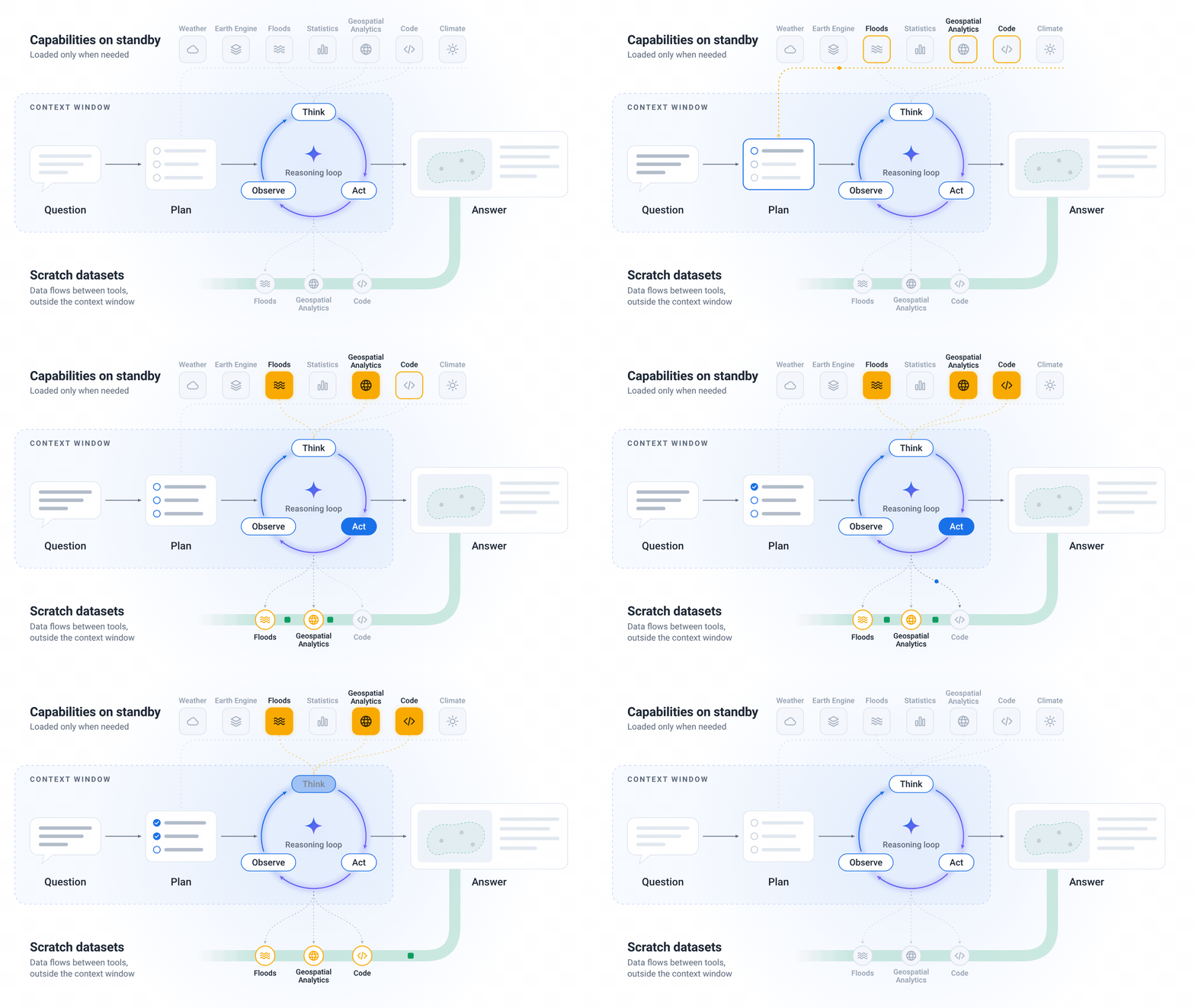
Addressing global challenges requires accurate, real-world planetary intelligence. With Google Earth AI, it becomes possible to forecast public health threats, accelerate clean energy investments, provide businesses with foresight, and more. Today, we’re expanding early access and inviting partners to explore three new ways to access Google Earth AI’s new, experimental capabilities:
- Conducting deeper geospatial analysis as part of an early access experimental feature in Google Earth.
- Generating risk assessments and forecasting different scenarios via our planetary prediction engine.
- Integrating our Geospatial Reasoning agent skills directly into custom workflows via an experimental agent-to-agent API, provides developers with programmatic access to core features like satellite imagery parsing, routing and demographic embeddings.
We’re also announcing the integration of Google Dataset Search for querying from more than 100 million public datasets, and TimesFM for planetary nowcasting and forecasting iterations. All these capabilities are powered by over 70 geospatial tools including planetary foundation models like Remote Sensing Foundation Model (RSFM) and Population Dynamics Foundation Model (PDFM). They are validated by empirical benchmarks detailed in today’s Earth AI Technical Report. They enable developers, health leaders and enterprise teams to automate complex geospatial workflows.
To further support social impact efforts, Google.org is providing $10 million in funding to organizations working on crisis resilience and public health. This includes $2 million to The Milken Institute to unlock infrastructure bottlenecks for affordable housing, clean energy, broadband, safe water systems, and other essential infrastructure.

Google Earth AI’s geospatial foundation models are being used to help predict disease outbreaks and enable public health teams to take proactive, preventive action.
2. Multi-agent orchestration helps scientists build on existing knowledge
Existing literature offers a great source of knowledge for driving new scientific discoveries. We built a multi-agent orchestrator, enabling scientists to reproduce previous methods and analyses and then apply them in new settings to tackle important research challenges. As an example, this helped researchers apply a new methodology for solving inverse design problems in fluid mechanics to the design of urinary catheters. They discovered catheter designs that, in simulation, were better at preventing bacterial infections.
This complements our existing tools to accelerate scientific workflows. Empirical Research Assistance enables scientists to generate and test thousands of code variations in parallel, and has helped researchers produce results from biology to cosmology to economics. Co-Scientist, built in collaboration with Google DeepMind, is a multi-agent tool that can generate novel hypotheses and has already helped partners, like researchers at Stanford University, uncover repurposed medicines to fight liver fibrosis.
3. Deep Review helps authors improve the clarity and accuracy of technical documents
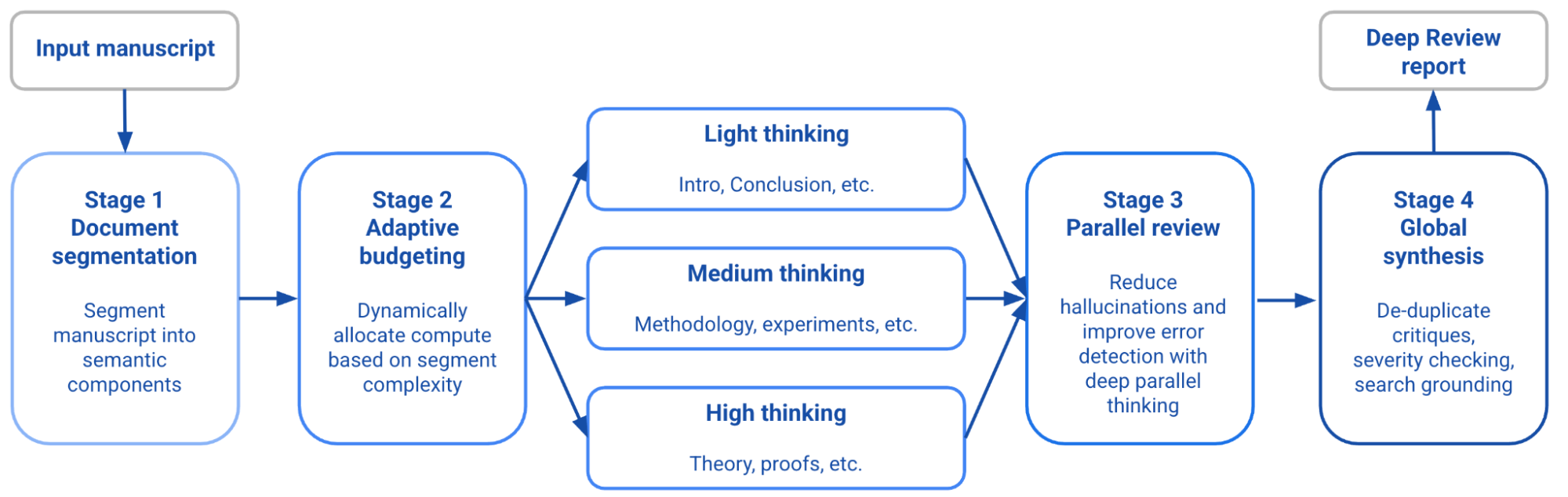
Thorough peer review is a core part of the scientific method. We created Deep Review, an agentic system that provides rigorous verification across complex documents. This is particularly important as AI is increasingly being used to help experts draft technical documents. Many Google researchers and external authors have already used an early version of this system to review over 16,000 research publications submitted to top-tier computer science conferences. It helps with the heavy cognitive lifting by checking logical consistency and grounding facts, while scientists maintain authority over creative direction. Today, we’re expanding access to Deep Review to the general public to help people verify a variety of technical documents from legal agreements to financial reports.
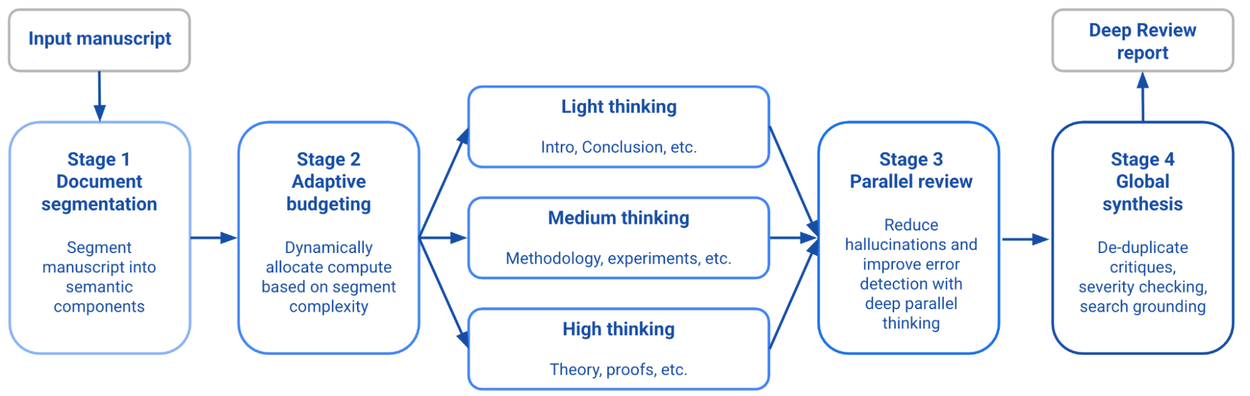
System architecture showing the four-stage pipeline.
4. Next-gen Edge AI chip enables manufacturers to build the wearables of tomorrow
With the rise of wearable devices, hardware manufacturers need the tools to develop efficient edge applications to meet the high expectations of customers for all-day performance. Earlier this year, we launched the first Coralboard from Synaptics, using Google’s Coral NPU accelerator core. It enables AI and ML engineers to rapidly prototype and build devices. Next week, we’ll be revealing our co-designed, next-gen, low-power Edge AI chip, created by Synaptics using our open source IP. The chip delivers greater efficiency and performance for design engineers building the next generation of smart glasses and watches, connected cameras, streamers, and industrial vision and voice systems.
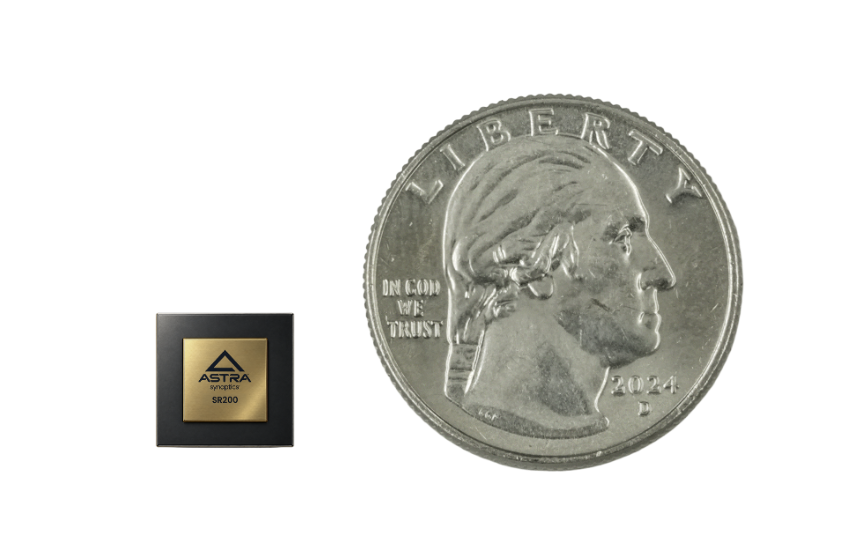
The new low-power Edge AI chip from Synaptics, as displayed next to a coin for its relative size.
5. TimesFM and TabFM transform how businesses work with numbers
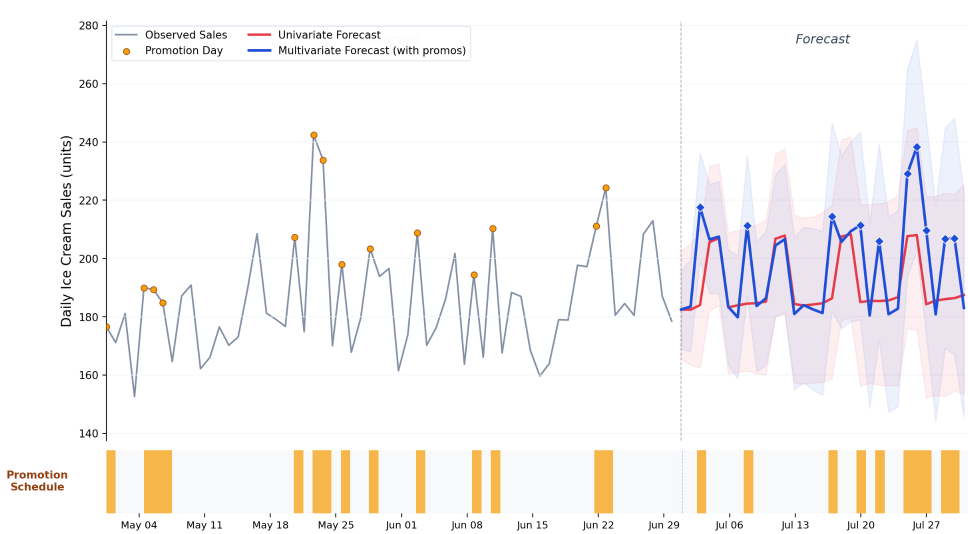
While language models excel with text, business and operational decisions also rely on numbers. TimesFM and TabFM are foundational models engineered specifically to reason over raw numerical distributions — time-series streams (data that changes over time) and structured tabular data (like spreadsheets). Both models deliver accurate predictions out of the box with zero training. They rank at the top of leading public benchmarks in their fields and are available to all Cloud BigQuery users. Today, we are announcing our upcoming integration of these models into Gemini for business. Soon, business owners, analysts, operation leads or coordinators can forecast trends like product sales or hospital bed capacity, based on complex operational tables and millions of rows of data. Sensitive data stays safely within an organization’s perimeter, and people get the answers they need in seconds.
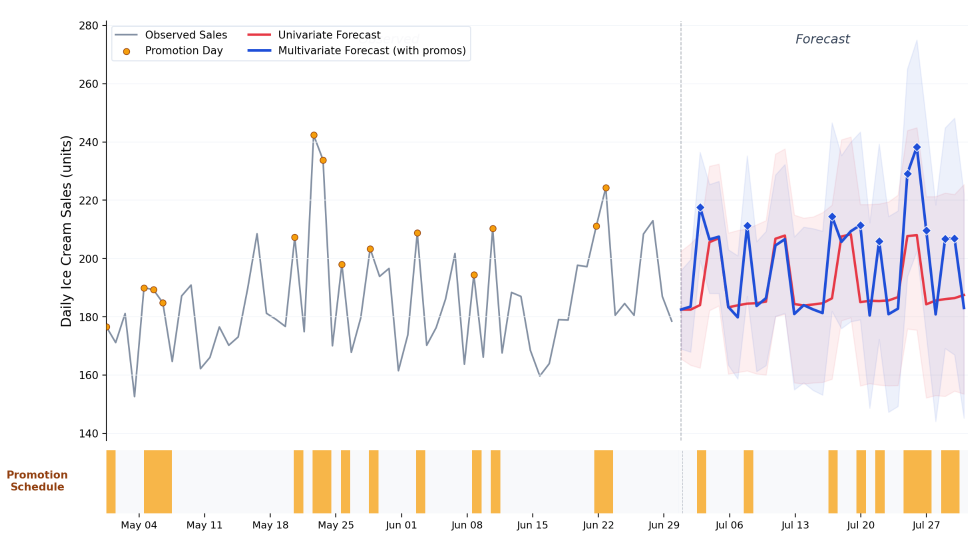
TimesFM-3's multivariate forecast helps to anticipate sales lift for a business on planned promotion days in the future.
6. MedGemma enables innovators to build and deploy health AI applications
MedGemma, published last week in Nature Medicine, has been downloaded more than 10 million times by more than 65,000 unique innovators. It serves as an open foundation for developers building specialized applications. Developers have adapted it to meet the needs of their local communities, from enabling faster triage in overcrowded clinics to screening for eye disease and cervical cancer.
As developers fine-tune MedGemma for more specialities and care settings, we’re pushing the frontier of open health AI. Our latest research advances MedGemma with tool use, so it can draw on available health records and other applications clinicians rely on. We’re exploring new modalities like mammography, ultrasound and electrocardiograms. Early signs point to substantial gains in capabilities, such as answering clinical questions and interpreting radiology scans, skin images and pathology slides. With these advances, we hope to expand what innovators can build, bringing effective healthcare to more communities around the world.
7. AMIE study advances the frontier of how conversational AI can support patients and clinicians
With our research on AMIE, we’re exploring the use of AI in clinical reasoning and conversations, to understand how it could empower clinicians and strengthen the patient-clinician relationship. Our research this year in Nature advanced AMIE’s capabilities beyond initial diagnosis toward long-term disease management, and in Nature Medicine, we showed how it can reason across multimodal data like medical images and lab results.
Our new study in The Lancet offers a promising look into how its capabilities could come to life in real-world clinical settings. At Beth Israel Deaconess Medical Center, 98 patients safely consulted AMIE ahead of urgent care visits, and clinicians reported that the AI summaries helped them prepare in 75% of cases. We’re also advancing AMIE’s multimodal capabilities towards real-time video consultations and have embarked on a nationwide randomized study of AI in real-world virtual care settings in partnership with Included Health.
AMIE is part of a rigorous research journey going back to our landmark MedPalm paper, and it’s still early days.
8. Groundsource makes it possible for researchers to predict natural disasters
AI can help us predict disasters with greater accuracy and lead time, giving communities a better chance to prepare and save lives. We’ve been making progress towards our crisis resilience north star: a world where no one is surprised by a natural disaster.
Take flood forecasting. Our global hydrologic model, published in Nature, allows us to provide reliable river forecasts up to 7 days in advance covering more than 2 billion people in over 150 countries for the most significant and impactful riverine floods. Yet just one year ago, predicting flash floods still seemed out of reach. Groundsource is our recent AI-powered methodology that turns publicly available information about crises into high-quality historical datasets, allowing researchers to build more accurate predictive models.
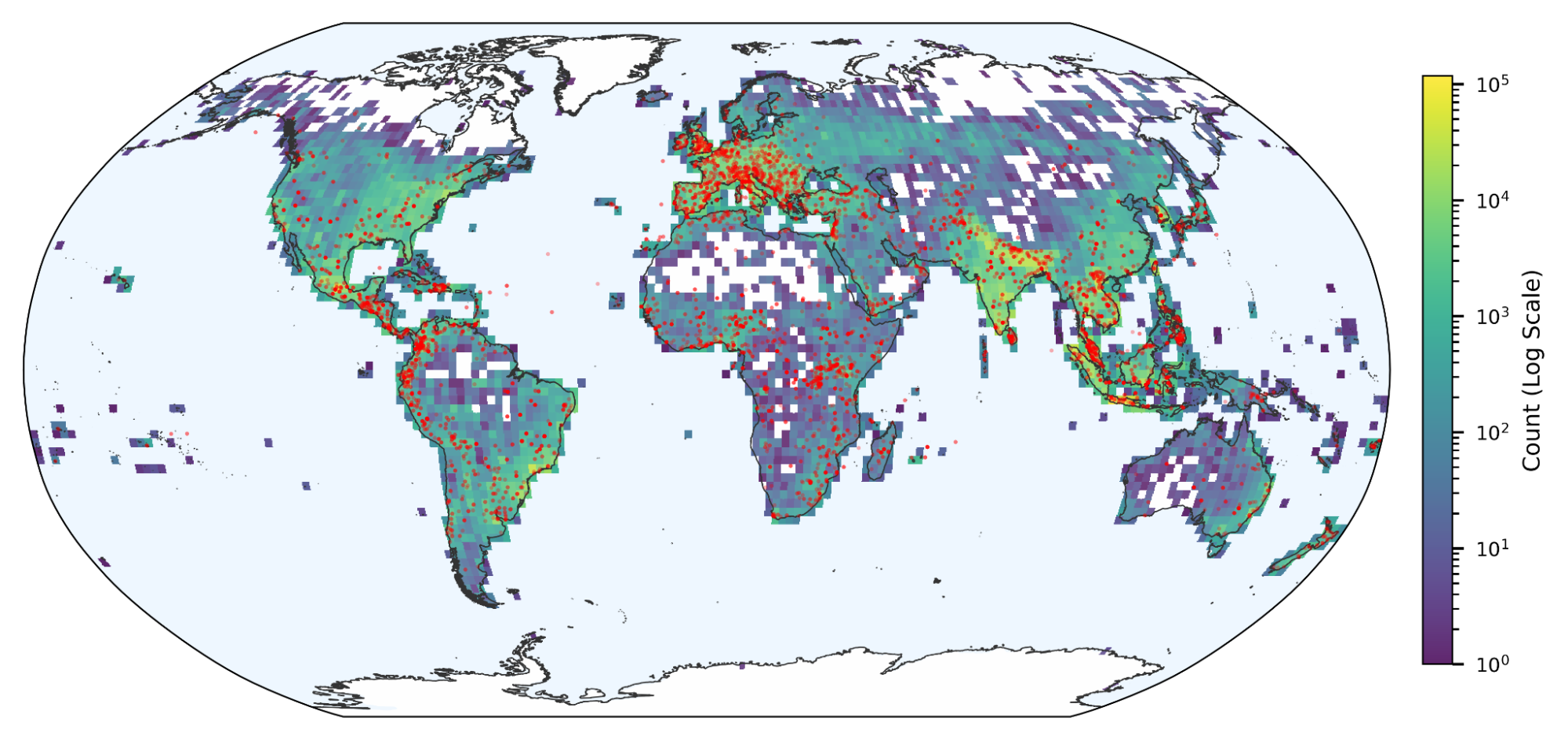
We first applied Groundsource with Gemini to analyze flood-related news reports and created a structured dataset with over 2.6 million flood events. This dataset helped us overcome a lack of ground-truth data for flash floods and train a new model that can predict the likelihood of flash flooding in urban areas up to 24 hours in advance. The dataset is now part of the Google Earth AI collection and we've made it openly available to help scientists conduct further analysis and research.
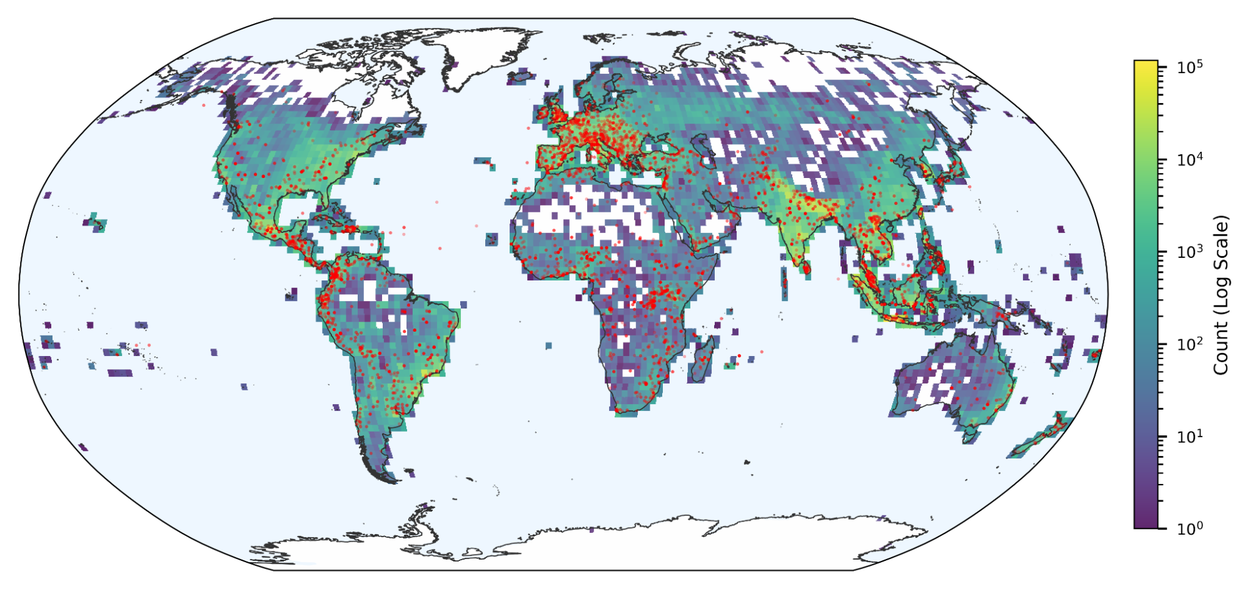
A global map showing the density of flood events in Groundsource. Red dots indicate floods from GDACS.
9. Learning interactives give teachers the ability to create custom, guided simulations
With generative UI, we can go beyond static outputs to dynamically generate functional, interactive software. Our research experiment explores this in the domain of education. We fine-tune generative UI with pedagogical guardrails to enable teachers to create custom, guided STEM simulations tailored to their curriculum. The sample library features over 30 AI-generated learning interactives, all vetted by teachers, for middle and high school physics, chemistry, biology, and math. Schools can sign up to the Google for Education Pilot Program to share feedback. This will help us improve the simulations and develop more for public use, making practice far more interactive and engaging.
10. Play with Putty facilitates collaborative, real-time prototyping for teams
Play with Putty allows teams to build and prototype together in a shared environment without breaking their creative flow. It demonstrates what’s possible as AI models become more efficient and capable of generating entire interfaces from natural language prompts. People can interact directly with any part of the interface, while multi-player editing supports seamless, real-time collaboration. We first designed Play with Putty to empower our researchers and teams across Google to prototype together — for example, exploring new solutions and visualizations with Google Earth AI. We’ve since opened up the waitlist on Google Labs to bring the joy of human collaboration to teams using AI everywhere.

These 10 updates highlight recent progress from our extensive research portfolio across many domains. Technology succeeds when we amplify human ingenuity. In this golden age of research and scientific discovery, the opportunity is greater than ever — to pioneer breakthroughs and share tools that empower others, in collaboration with many. We’re excited about the journey ahead.
Other posts of interest
-

October 14, 2026
Analyzing technical documents with Deep Review- General Science ·
- Machine Intelligence ·
- Natural Language Processing
-
October 14, 2026
Putting Earth AI to work: Geospatial agents for our planet's biggest challenges- Earth AI ·
- General Science ·
- Machine Intelligence
-

October 6, 2026
Unlocking Earth AI’s planetary geospatial foundation models for global public health- Earth AI ·
- Global ·
- Health & Bioscience